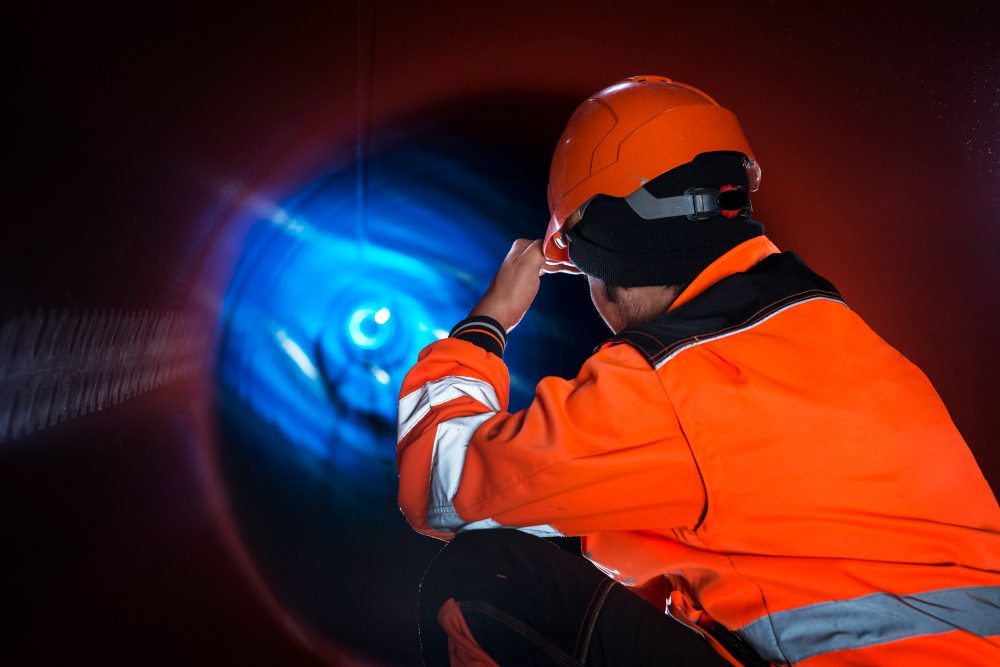
It was a scheduled repair job inside a utility vault beneath a busy street. The supervisor had signed off on the work, assuming that since the power was shut off, the space was safe. Two workers went in. A few minutes later, the Attendant radioed down, but only silence came back. When the emergency services arrived, the initial responding fire crew made the instinctive, fatal mistake: two firefighters rushed in without proper air monitoring or retrieval equipment.
The cause of the fatality, and the subsequent injury to the rescuers, wasn’t electrocution. It was an oxygen-deficient atmosphere caused by microbial activity in standing water, creating a silent, invisible killer. The lesson, learned at a tragic cost, is absolute: in a confined space, an educated guess is a deadly one.
Confined space incidents are rare, but when they occur, they are uniquely catastrophic, accounting for a high percentage of multiple fatalities (rescuers often become victims). For the construction industry, compliance requires more than good intentions; it demands rigorous adherence to 29 CFR 1926 Subpart AA (Construction).
Compliance requires a systematic, four-tiered approach: Identification, Program Development, Pre-Entry Preparation, and Rescue Planning. This checklist provides the required best practices to manage this extreme, high-consequence hazard.
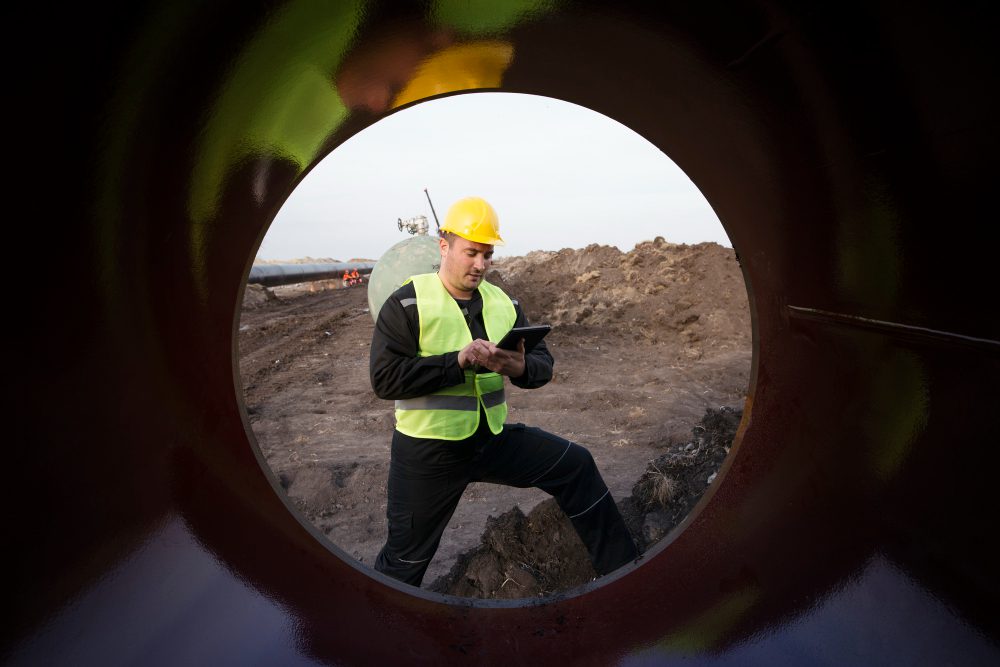
The Regulatory Foundation – Identification and Classification
Before any work begins, the space must be correctly identified and classified. Misclassification is the root cause of most fatalities.
What is a Confined Space (CS)?
A space is considered “Confined” if it meets all three of the following criteria:
- It is large enough and configured for an employee to bodily enter and perform assigned work.
- It has limited or restricted means for entry or exit (e.g., manholes, tanks, crawlspaces).
- It is not designed for continuous employee occupancy (e.g., utility tunnels, process vessels).
The Danger Zone: Permit-Required Confined Space (PRCS)
Once a space is identified as confined, it must be evaluated to see if it qualifies as a Permit-Required Confined Space (PRCS). A PRCS is a confined space that contains one or more of the following hazards (often called the “Big Four”):
- Atmospheric Hazard: Contains or has the potential to contain a hazardous atmosphere (toxic, flammable, oxygen deficient <19.5%, or oxygen enriched >23.5%).
- Engulfment Hazard: Contains a material (like grain, sand, sludge, or water) that could engulf or asphyxiate the entrant.
- Entrapment Hazard: Has an internal configuration such that an entrant could be trapped or asphyxiated by inwardly converging walls or a floor that slopes downward.
- Other Serious Hazard: Any other recognized serious safety or health hazard (e.g., live electrical parts, unguarded mixers, or extreme heat).
If a space meets the definition of a PRCS, entry is forbidden until a written program and a valid entry permit are in place.
Reclassification and Alternate Entry
- Reclassification: If a certified professional can permanently eliminate all PRCS hazards (e.g., locking out a mixer and physically blanking all pipes), the space can be reclassified to a non-permit space.
- Alternate Entry: If the only hazard is atmospheric, and that hazard can be eliminated through continuous forced air ventilation, a simpler “Alternate Entry” procedure may be used, which requires continuous ventilation and monitoring, but simplifies the required rescue system.
Program Development Checklist (The Administrative Core)
Compliance starts with the paperwork—a robust, written program that assigns responsibility and provides resources.
A. Written Program and Training
The employer must develop and implement a written Permit-Required Confined Space Program and ensure it is available at the job site. All personnel involved in the process must be trained before assignment, and training records must be meticulously maintained.
B. Defining Roles and Responsibilities
Every successful entry operation relies on a clearly defined, three-person team:
- Authorized Entrant: The person who goes in. They must know the hazards, correctly use personal protective equipment (PPE), and maintain communication with the Attendant.
- Attendant: The person stationed outside the entry portal. They must maintain continuous visual and vocal communication, monitor hazards, and initiate rescue procedures. They are strictly forbidden from entering the space.
- Entry Supervisor: The person responsible for overall control. They must verify all pre-entry measures are complete, sign the permit, and authorize and terminate entry.
C. Required Equipment
You must have all necessary equipment on-site and calibrated before work begins:
- Gas monitors (multi-gas preferred).
- Ventilation equipment (blowers, ducts).
- Retrieval systems (tripods, winches, harnesses).
- Communication devices (radios).
- PPE (respirators, gloves, protective clothing).
The Pre-Entry Permit Checklist (Execution and Verification)
This is the phase of execution where planning turns into action, and the Permit serves as the final, binding signature that all checks are complete.
1. Hazard Control (Isolation is King)
- Lockout/Tagout (LOTO): Verify that all electrical, mechanical, and power sources that could energize, start, or move equipment within the space are isolated, locked out, and tagged according to your site-specific LOTO program.
- Isolation: Physically blind, block, or disconnect all lines, pipes, and ducts that could introduce hazardous material (gas, steam, liquid) into the confined space.
- Purging/Cleaning: If the space contained toxic or flammable material, ensure it is thoroughly purged and cleaned before atmospheric testing begins.
2. Atmospheric Testing (The Three-Tiered Test)
Testing must be conducted by a qualified person in this specific order, using calibrated equipment. This is necessary because some gases can interfere with others.
- Oxygen: Test first for deficiency or enrichment .
- Flammables: Test for LEL (Lower Explosive Limit). Entry is generally prohibited above $10\%$ LEL.
- Toxics: Test for known or suspected contaminants (e.g., hydrogen sulfide, carbon monoxide) to ensure concentrations are below the PEL.
Critical Note: Gases have different densities. Testing must be conducted at the top, middle, and bottom of the space (stratified testing) to account for gases that sink (like hydrogen sulfide) or rise (like methane).
3. Ventilation and Continuous Monitoring
- If hazardous conditions were found, continuous forced air ventilation must be applied to eliminate the hazard before and during entry.
- Verification: Atmospheric testing must be performed while ventilation is running to ensure the air movement is effectively controlling the hazard and not introducing a new one.
- Continuous Monitoring: The Attendant must continuously monitor the atmosphere for the duration of the entry. If any condition changes, the space must be evacuated immediately.
4. Permit Completion
- All fields on the permit are accurately completed, including the time and date of authorization, the hazards identified, the controls implemented, and the specific names of all personnel.
- The Entry Supervisor signs and authorizes the entry.
- The permit is posted at the entry portal, ensuring all personnel are aware of the conditions and rules.
Rescue and Retrieval Checklist (The Life-Saving System)
The most critical element of the PRCS standard is the requirement to have a rapid, effective method for Non-Entry Rescue.
1. Non-Entry Rescue (The Gold Standard)
This is mandatory because the single greatest risk to the entrant is the immediate, instinctive entry of an untrained rescuer.
- Mandatory Retrieval System: A mechanical retrieval system (such as a tripod and winch) must be used if the entry is vertical (over 5 feet) or if the hazard involves engulfment or entrapment.
- Harness and Line: Entrants must wear a full-body harness with a retrieval line attached, allowing the Attendant to extract the worker without entering the space.
2. External Rescue Services (The Contract)
If the non-entry retrieval system is inadequate (e.g., due to complex internal geometry or immediately dangerous atmospheric conditions), you must rely on an external rescue team.
- Identify and Contract: You must identify, contact, and arrange for an external rescue service (e.g., municipal fire department or dedicated contractor).
- Verification: The employer must verify that the rescue service is available, proficient, and equipped to perform PRCS rescue and can reach the site within a response time commensurate with the hazard. This verification step is a huge compliance gap for many companies; a phone number on a permit is not enough.
- Communication: Ensure the rescue service is informed of the specific hazards of the space before entry begins.
3. Post-Entry Procedures
- When the work is complete, the Entry Supervisor must verify that all personnel, tools, and equipment are removed.
- The permit is officially cancelled.
- The cancelled permit must be filed and retained for at least one year for regulatory review.
Conclusion: Systematizing Safety in High-Risk Environments
Confined space safety is the ultimate test of a company’s safety management system. The construction standards are not guidelines; they are strict, detailed mandates designed to eliminate tragic, preventable fatalities.
Compliance requires technical competence, meticulous administrative controls (the Written Program), and flawless execution on site (the Permit Checklist). Don’t risk a PRCS fatality due to an unverified rescue plan or incomplete LOTO.
Don’t Guess on Confined Space Safety. Verify Your Program.
👉 Book a Confined Space Program Audit and Rescue Plan Verification.
Resource Link: For the official OSHA construction standard on Confined Spaces: 29 CFR 1926 Subpart AA – Confined Spaces in Construction